Case Study · IKEA Culver City Grand Opening · 2026
How a franchise turned its grand opening into 601 new art collectors
Without harvesting a single email
601
New art collectors: anyone who walked away with a piece
12.5%
Of grand opening budget invested in art programming · industry avg 3–8%
3 AM
When the line started · didn't break from open to close
100shirts
Live screen-printed on-site by The Apparel Studio
500prints
Archival, museum-quality, distributed to attendees
1mural
Painted live on-site, raffled to one entrant
The setup
IKEA opened its first Los Angeles city-format store at the historic 1931 Helms Bakery building in Culver City. The franchise wanted the neighborhood to walk away saying "that store belongs to this neighborhood now". To make that happen, they committed an unusual share of opening spend to art programming. Artist Safespaces ran it end-to-end: artist curation, asset commissioning, on-site experience design, and the digital infrastructure tying it all together.
What attendees took home
Original art, added to the freebie program.
Every grand opening has a freebie program. The Culver City franchise added an original art layer to theirs, with a real choice mechanic for attendees:
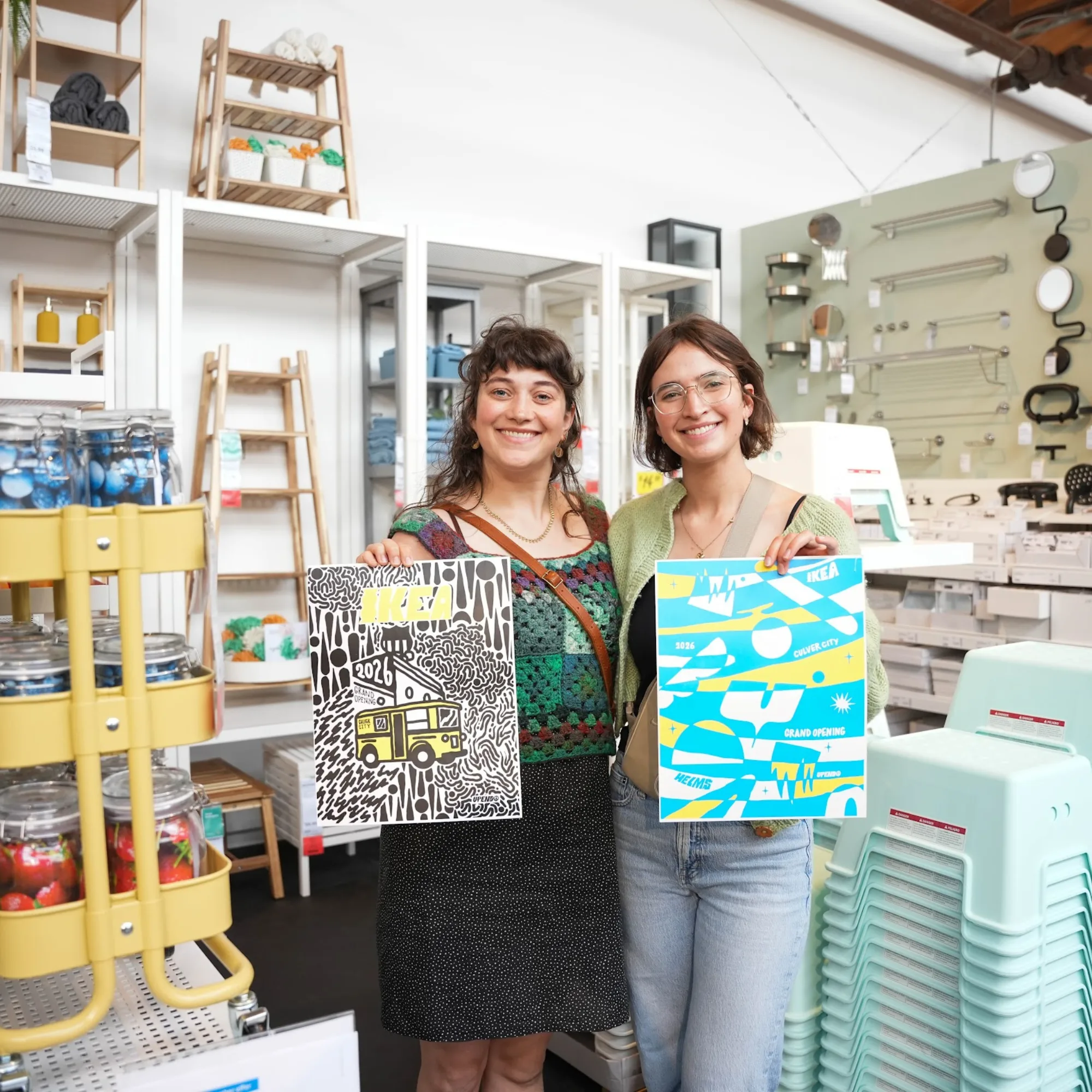
- Walk in and pick one. A live screen-printed shirt or an archival, museum-quality print. First-come-first-serve, one per person. 100 shirts. 500 prints.
- Plus, every attendee could enter the giveaway for the original mural painted live on-site that day.
- Want both a shirt and a print? Get back in line. People did.
Same line, same opening, same attendees. 601 pieces of original art by working artists, now living in Culver City homes.
What we made
Two live activations running in parallel.
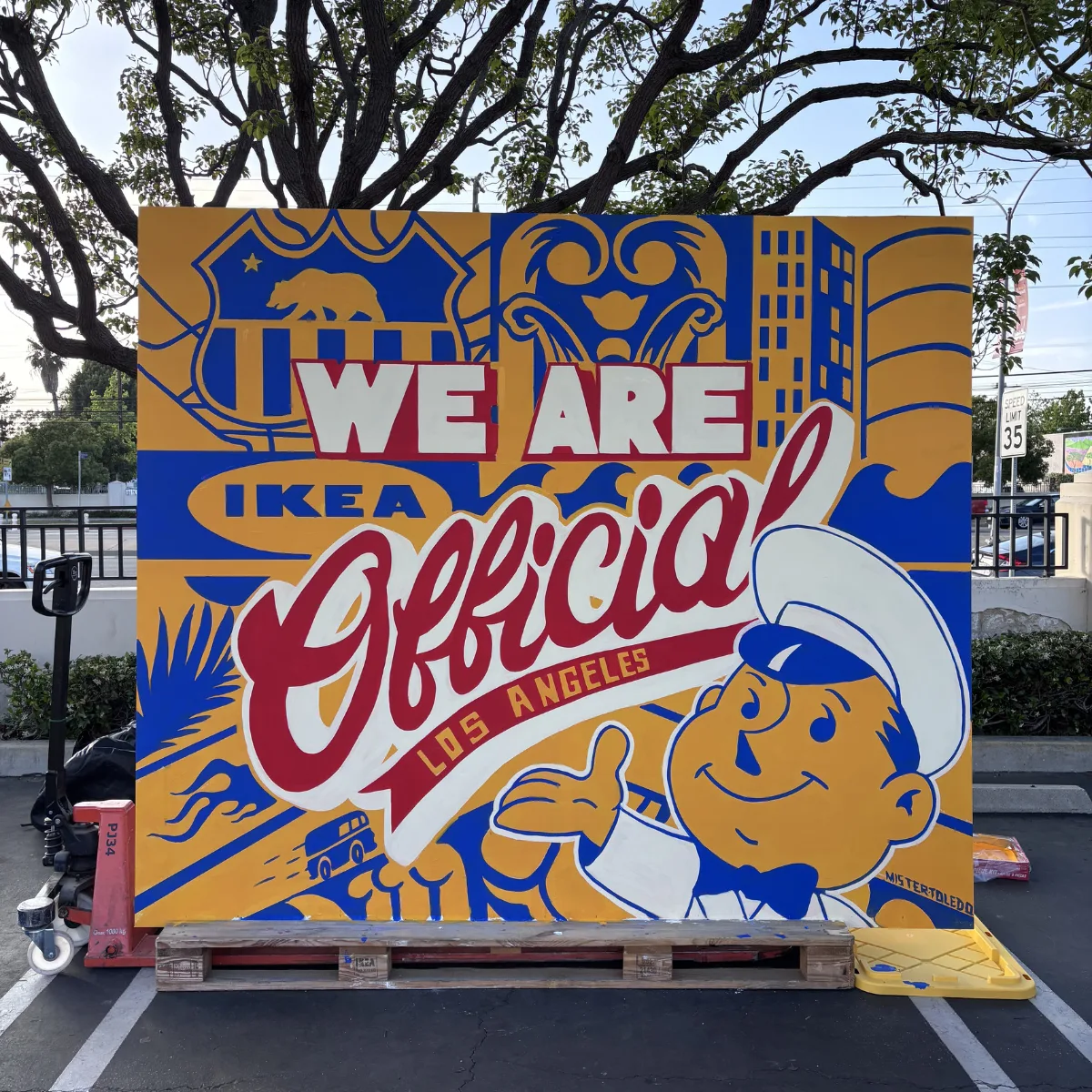
Live mural
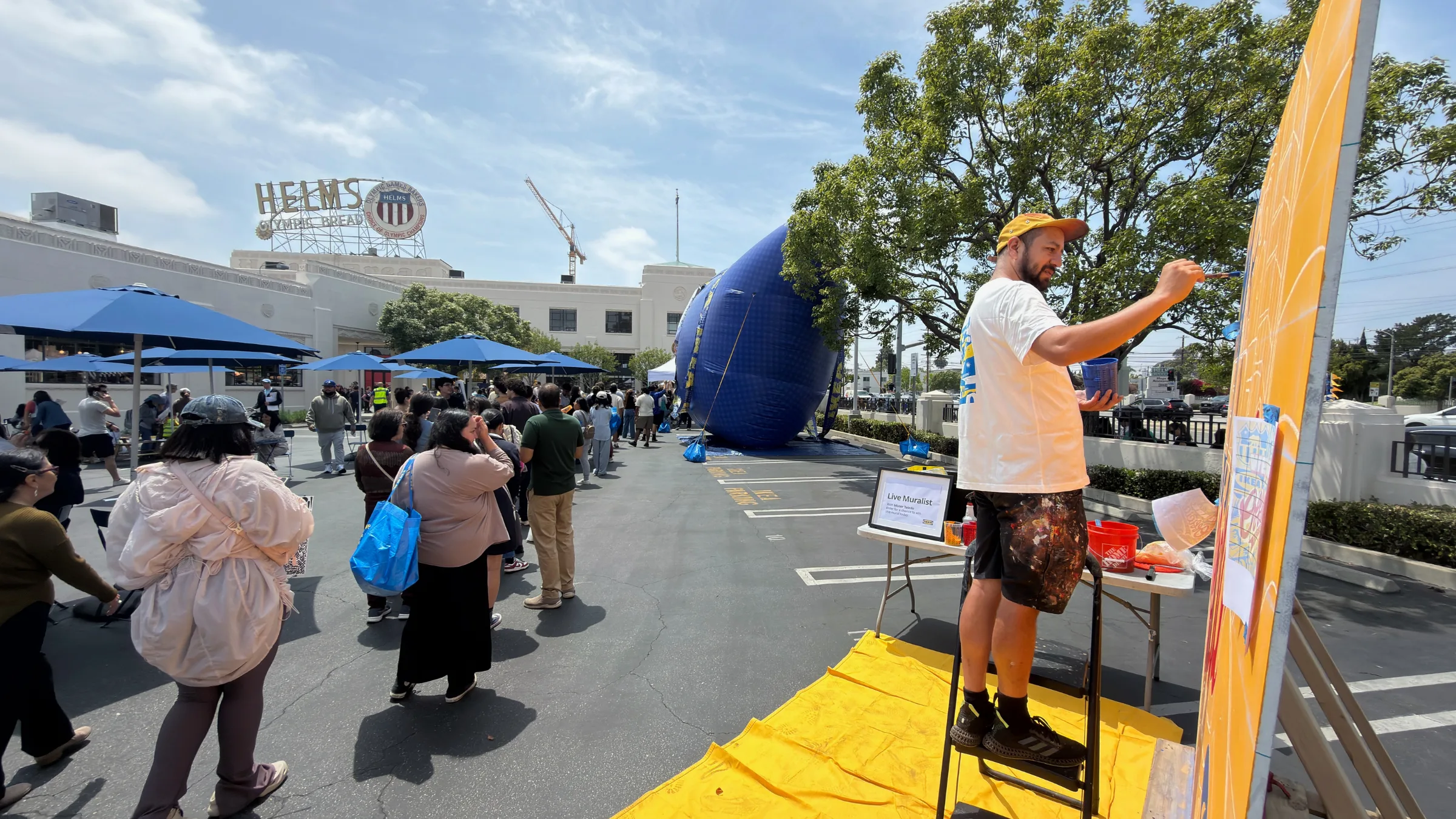
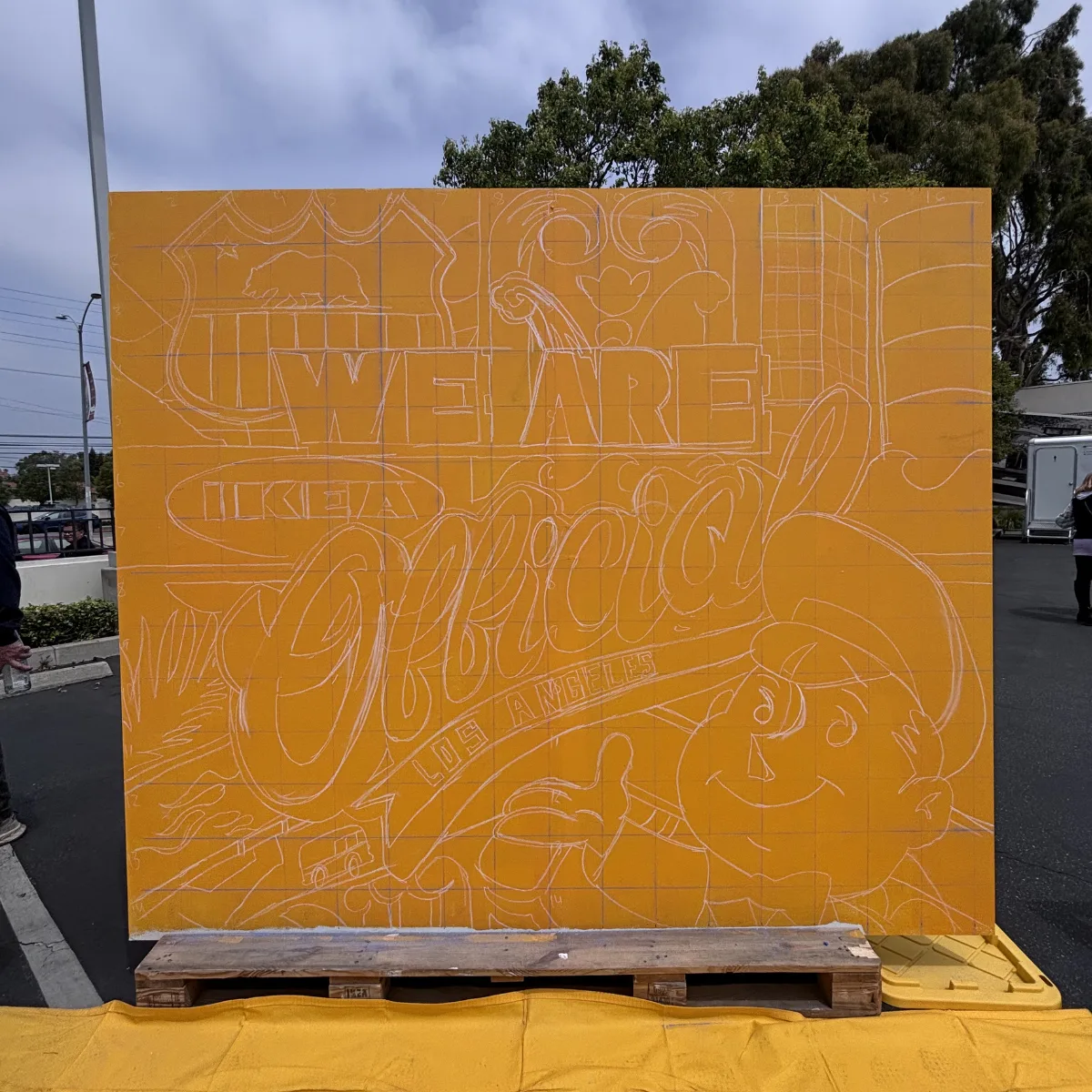
Daniel Toledo (@mister_toledo) painted on-site through the day, drawing on the Helms District's art-deco and bakery heritage. The finished piece was raffled to one entrant who picked it up the following Sunday.
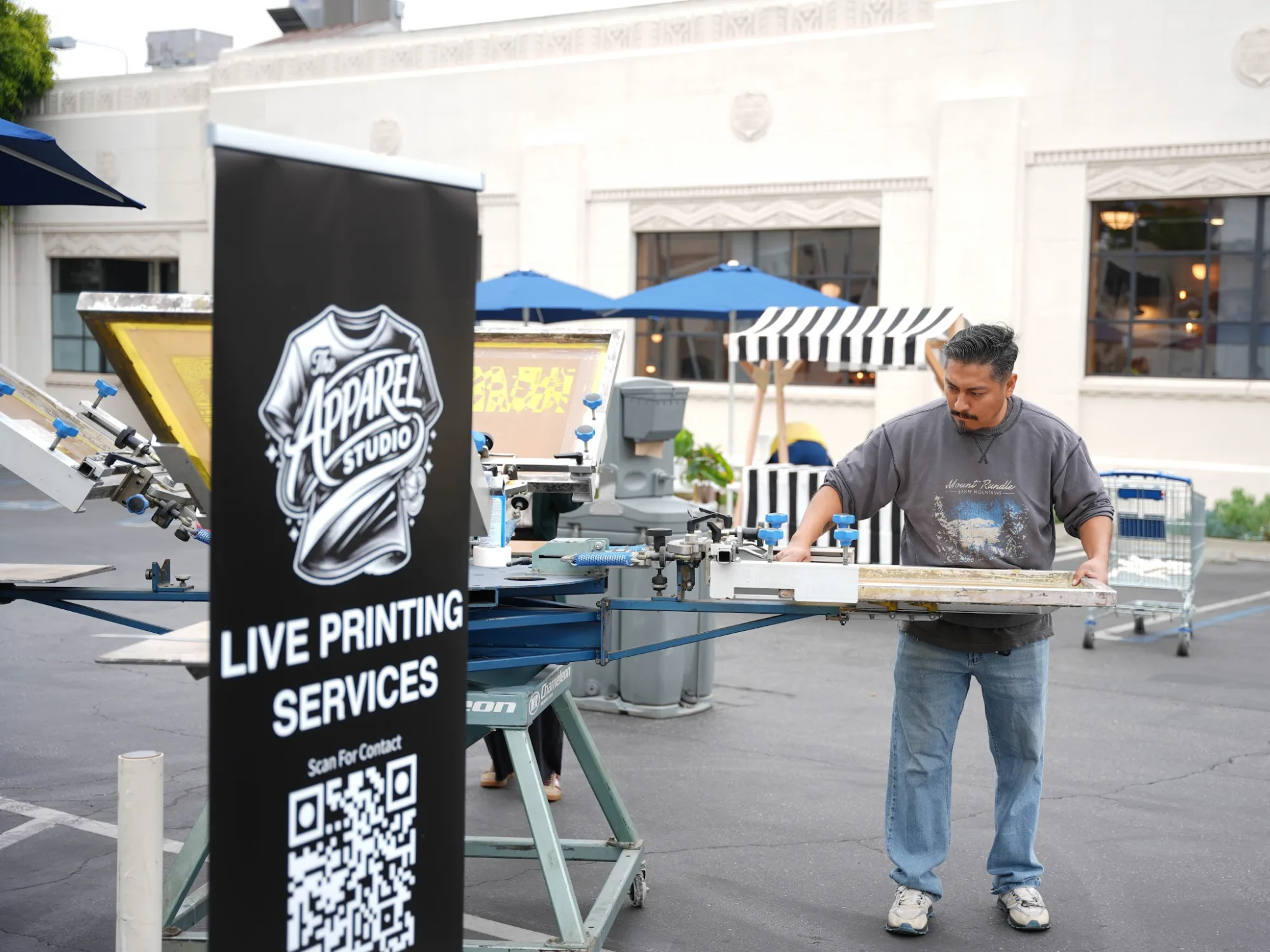
Live screen-printed shirts
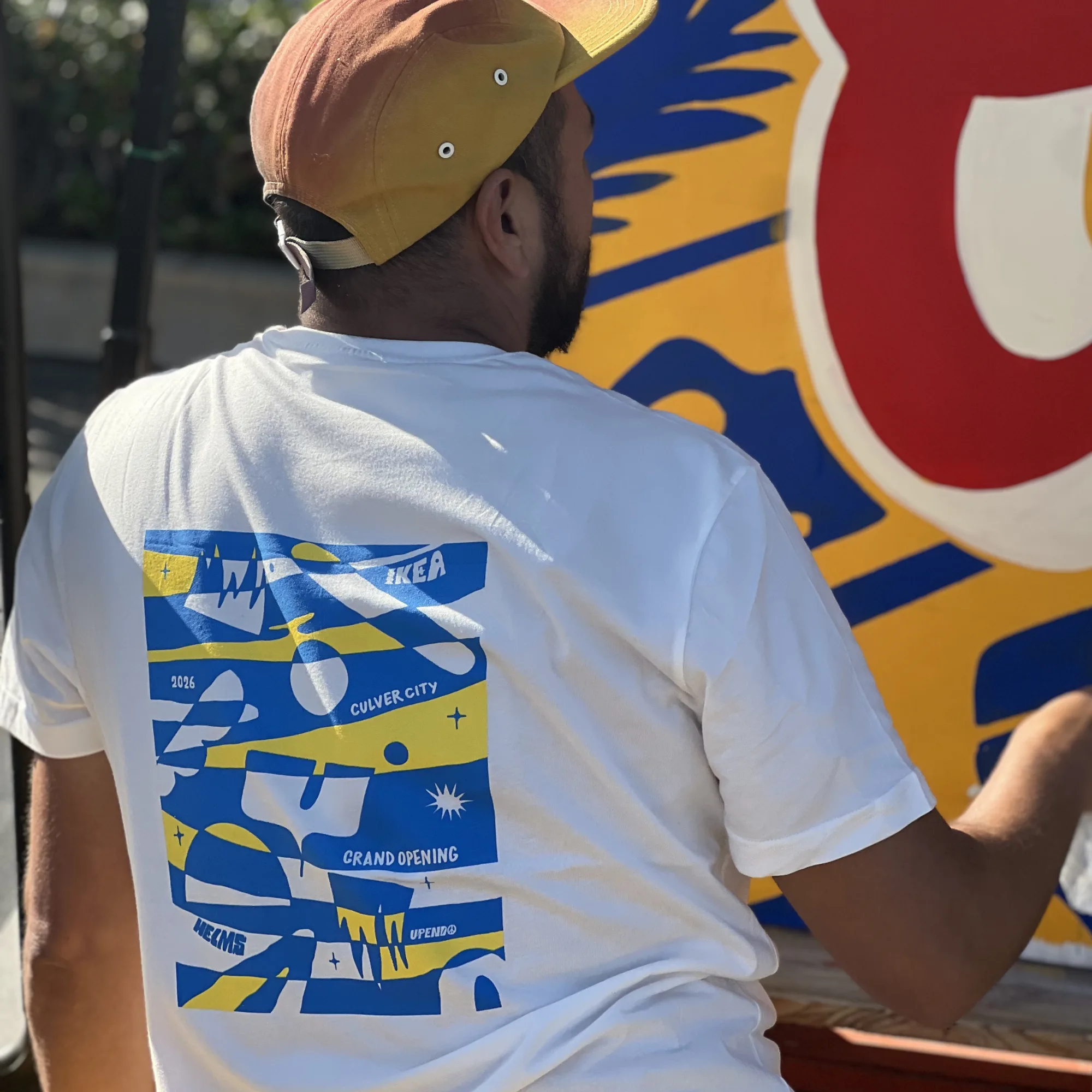
Ivan and the team at The Apparel Studio ran a working press for hours, printing 100 limited-edition shirts on demand featuring original artwork by @upendo_. Attendees watched their shirts get pulled, one at a time, until the run was gone.
Custom digital infrastructure
Bespoke giveaway page, QR-coded entry across asset packaging and signage, edge-cached pages tuned for press traffic, and a real-time admin dashboard for randomized winner selection. All running on infrastructure the franchise owns.
On the day
The line did not break.
Attendees started lining up at 3 AM. By the time doors opened, the queue stretched the length of the Helms District. The first-500 freebies moved faster than anyone planned for; the prints ran out early, and visitors who'd already received a shirt rejoined the line for a print.
Two live activations ran in parallel through the entire day: Toledo painting, The Apparel Studio printing. The lines did not break from open to close.
How we handle the data
Honest, respectful, transparent.
Most experiential marketing exists to convert attendees into leads. Eventbrite RSVPs, Google Forms, Mailchimp pipelines. Every interaction designed to extract a contact for ongoing marketing.
We don't operate that way. Entry data is collected for the giveaway, used for the giveaway, and deleted after the giveaway concludes. No list-sharing with partners. No CRM hand-off. No "let's keep them warm for next quarter."
Consumers can tell the difference. An art experience that respects the audience builds the kind of brand trust paid media cannot buy. When attendees know their email isn't going to a marketing pipeline, they engage authentically, and the activation reads as genuine community programming instead of a lead funnel in costume.
Why the budget allocation matters
12.5% of opening spend went to art. Industry average is 3–8%.
Roughly 2–4× the industry average, on a franchise budget that's materially tighter than corporate. The thesis: an original art layer in the freebie program builds first-year customer loyalty in ways a larger ad buy can't.
601 pieces of original art in 601 Culver City homes. Lines from 3 AM to close. A community walking away with a real cultural artifact from their neighborhood opening. That's the evidence.
What Artist Safespaces does
Artist Safespaces curates and operates. We don't paint the mural; we book the muralist. We don't run the IKEA opening; we run the art program at the IKEA opening: assembling the right specialists, designing the on-site flow, and owning the infrastructure that makes it measurable. The brand sees one coherent activation instead of five disconnected vendors.
Collaborators
- Mural · Daniel Toledo (@mister_toledo), assisted by Abby Aceves (@abby_aceves)
- Shirt artwork · @upendo_
- Live screen printing · Ivan and the team at The Apparel Studio
- IKEA · Culver City × Burbank × Costa Mesa teams collaborated on the activation. Artist Safespaces came in via Costa Mesa.
- Curation, infrastructure, and operations · Artist Safespaces
Press
- New York Post · Primary on-the-ground coverage
- ABC7 Los Angeles
- AOL News
- Yahoo News
What's next
Booking conversations.
The IKEA Culver City activation is a polished version of a model Artist Safespaces has been running for three years at our annual Art Therapy festival. The mechanics travel: local artists who show up with professionalism, original art layered into the freebie program, owned infrastructure that makes the day measurable. Any city, any grand opening, any cultural moment.
Partner With Us